





-550x550-100x100.jpg "Carrying Bag For Massage Beds | Megafitness")
HYROX: From Fitness Trend to a €600 Million Business
HYROX is no longer just a fitness trend. In less than a decade, it has grown into a global sporting and business phenomenon, attracting more than 1.4 million participants during the 2025–2026 season. The recent acquisition of a majority stake by a consortium led by L Catterton—an investment firm backed by the LVMH group—and its reported valuation of approximately €600 million confirm the growing global momentum of Hybrid Training.
The news quickly attracted attention beyond the fitness industry, largely because of L Catterton’s relationship with LVMH – Moët Hennessy Louis Vuitton. However, it is important to describe the deal accurately: HYROX was not acquired directly by Louis Vuitton. The investment was made by a consortium led by L Catterton, a firm backed by LVMH.
Beyond the names involved and the reported value of the deal, this development sends a clear message to the global market: Hybrid Training is no longer viewed as a passing fitness trend. It is evolving into an international sporting and business ecosystem.
What exactly happened with HYROX?
On 8 September 2026, Infront Sports & Media announced that it had sold its majority stake in HYROX to a group of investors led by L Catterton. The agreement also includes HYROX co-founders Christian Toetzke and Moritz Fürste, who have strengthened their control of the company, as well as investment firm WndrCo.
According to the official announcement by Infront Sports & Media, the financial terms of the transaction were not disclosed. However, media reports have placed HYROX’s valuation at approximately €600 million.
Reuters also confirms that the HYROX founders regained control of the company with the support of the L Catterton-led consortium. Infront originally invested in HYROX in 2019 and became its majority shareholder in 2022.
The connection exists, but it is indirect.
Louis Vuitton is one of the leading brands within the LVMH group. L Catterton, however, is a separate company: a global investment platform backed by LVMH and the family investment company of Bernard Arnault.
The Wall Street Journal describes L Catterton as an investment firm backed by LVMH and reports that its consortium is acquiring a majority stake in HYROX.
Therefore, the claim that “Louis Vuitton bought HYROX” is an oversimplification and does not accurately reflect the structure of the transaction. The correct version is that a consortium led by L Catterton, which is backed by LVMH, acquired a majority stake in HYROX.
Why is this deal so important for the fitness industry?
HYROX combines running with strength and endurance exercises. In every race, athletes complete eight one-kilometre runs, with eight different functional workout stations between them.
In just a few years, HYROX has gained enormous international appeal. During the 2025–2026 season, it hosted more than 100 events, attracting over 1.4 million participants and more than 1.5 million spectators, according to figures published by Infront.
The new investment shows that Hybrid Training is no longer considered a temporary trend. Major investors see significant growth opportunities across events, training programmes, partner gyms, specialised equipment and the fitness industry as a whole.
HYROX’s founders have also stated that they want to develop the sport further, introduce new products and, in the future, pursue inclusion in the Olympic Games.
What does this mean for gyms and fitness studios?
The agreement is another strong indication that Hybrid Training is establishing a lasting position in the international fitness market.
For gyms, boutique studios and functional training facilities, this creates new possibilities. A well-designed Hybrid Training Zone can support group workouts, personal training, small-group sessions and preparation for fitness races. It can also give a facility the opportunity to introduce new programmes and membership options.
However, creating an effective training zone involves more than simply placing equipment in an available area. It requires careful space planning, suitable flooring, safe distances between stations and durable equipment designed for daily professional use.
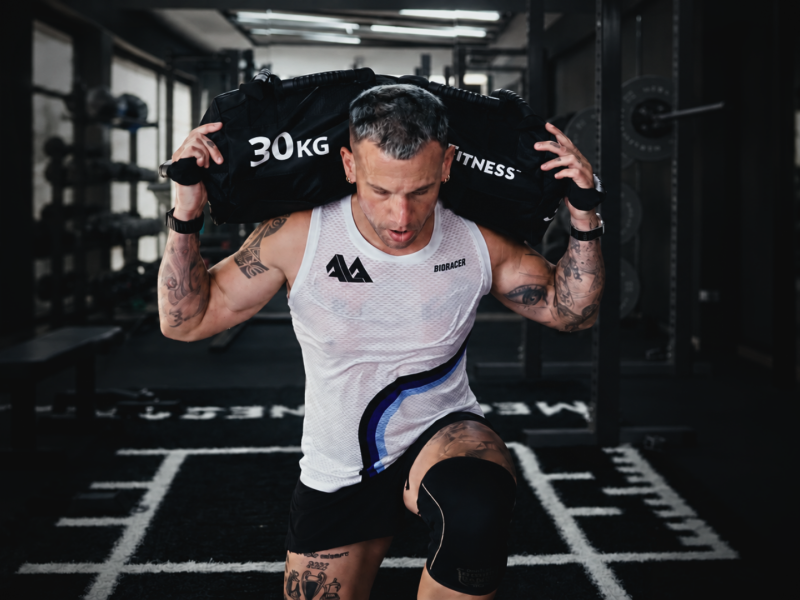
Sleds, turf tracks, ropes, bumper plates, dumbbells, power bags and wall balls are among the key elements of a complete hybrid setup. Their selection and layout should be based on the available floor space, the number of athletes and the training model of each facility.
Hybrid Training moves to the next level
L Catterton’s investment in HYROX shows that fitness racing and functional training are becoming increasingly important within the global fitness market.
For fitness professionals, this development is an opportunity to consider how Hybrid Training can become part of their services. Achieving the right result requires thoughtful planning, suitable equipment and a training programme tailored to the actual needs of each facility and its members.
MegaFitness supports the growth of Hybrid Training by providing specialised training packages and professional gym equipment designed to meet the demands of high-intensity daily use. From individual functional zones to complete hybrid training setups, each solution can be adapted to the available space, training needs and business objectives of a facility.